
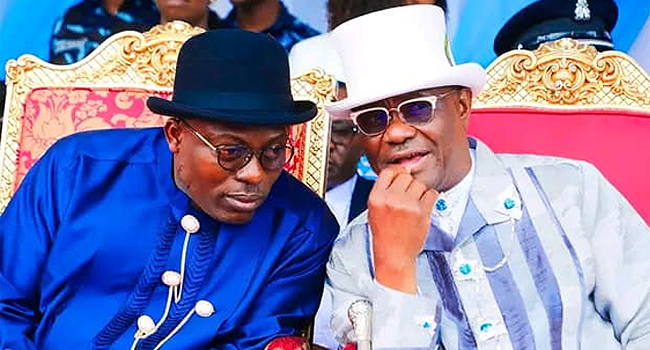
Just yesterday (20/05/26) the air waves were dominated with the news of the governor of Rivers state, Sir Siminalayi Fubara withdrawing from the APC governorship primaries. To every logical mind, that was an embattled godson throwing in the towel in a duel with his godfather.
The tragedy of Nigerian politics is not merely the weakness of some leaders; it is the suffocating grip of political godfatherism that has held this nation by the jugular for decades.
The unfolding events around Siminalayi Fubara are not isolated. They are symptoms of a deeper national disease — a system where elected leaders often become tenants in Government Houses owned by unelected political landlords. These godfathers install governors, dictate appointments, corner state resources, and expect absolute loyalty in return. Governance becomes secondary. Development suffers. The people become collateral damage.
Yet, while many will rightly criticize the overbearing influence of political emperors, we must also confront the uncomfortable reality of leadership weakness. History remembers those who stood firm under pressure, not those who retreated into silence when the people needed courage most. Once you become the symbol of resistance, surrender carries consequences beyond personal defeat; it crushes public hope.
But perhaps the greatest tragedy is not even the politicians. It is the frightening docility of the Nigerian citizenry. A people battered by weaponized poverty, corruption, hunger, unemployment, insecurity, and decades of systemic manipulation have gradually developed what resembles political Stockholm Syndrome — emotionally defending the same structures that oppress them.
Citizens celebrate leaders instead of demanding accountability from them. Ethnic loyalty has replaced competence. Stomach infrastructure has replaced ideology. Poverty has become a political weapon; ignorance has become an instrument of control.
And so, the cycle continues:
The oppressors recycle themselves.
The oppressed defend them.
The nation sinks deeper.
Nigeria cannot progress until citizens realize that democracy is not a spectator sport. Freedom is never donated by political elites; it is demanded by an enlightened, courageous, and organized citizenry.
The time has come for Nigerians to break free from psychological captivity. To stop worshipping political figures as saviors. To stop normalizing oppression. To stop surrendering their future for temporary crumbs.
A hungry and fearful people can easily be controlled.
But an awakened people cannot be enslaved for long.
Until Nigerians collectively rise beyond fear, poverty, ethnicity, and political manipulation to hold leaders accountable at every level, the godfathers will continue to rule, weak leaders will continue to emerge, and the suffering masses will continue to pay the price.
Enough must finally mean enough.
Emmanuel Audu-Ohwavborua